Solid vs. Engineered Hardwood: Which Is Right for Your Home?

When homeowners start shopping for hardwood flooring, the question of solid vs. engineered hardwood comes up almost immediately. Both are real wood. Both look beautiful. But they perform differently depending on where you install them, how you live in your home, and what your long-term goals are. This guide breaks down every meaningful difference so you can make the right call before you buy. For a broader look at the category, the complete hardwood flooring buying guide at Flooring.org covers everything from species selection to installation methods.

The Core Differences Between Solid and Engineered Hardwood

How They’re Built

Solid hardwood is exactly what the name says: a single piece of wood milled to a consistent thickness, typically 3/4 inch. Every plank is 100 percent wood from top to bottom.

Engineered hardwood is also real wood, but constructed differently. A genuine hardwood veneer sits on top of multiple layers of cross-ply plywood or high-density fiberboard. That layered core is what makes engineered hardwood behave differently under pressure, moisture, and temperature changes.

Neither construction is inherently superior. The right choice depends entirely on where the floor is going and what it needs to do.

Moisture Resistance and Where You Can Install Each

This is the most important practical difference between the two products.

Solid hardwood expands and contracts as humidity changes. That is simply the nature of natural wood. Managed correctly, it is not a problem. But it does mean solid hardwood is best suited to above-grade installations: main floors, bedrooms, living rooms, and dining rooms in climate-controlled spaces. It should not be installed in basements, over concrete slabs, or in rooms with significant moisture exposure.

Engineered hardwood handles humidity fluctuations far better because the cross-ply core resists expansion and contraction. This makes it suitable for:

  • Below-grade installations (basements)
  • On-grade installations over concrete slabs
  • Over radiant heat systems
  • Kitchens and spaces with moderate moisture exposure

If you are planning hardwood in a finished basement, engineered is the right answer. There is no version of solid hardwood that performs reliably below grade over the long term. Browse prefinished engineered hardwood options at Flooring.org to see the full range of species and finishes available.

Refinishing: How Many Times Can Each Floor Be Sanded?

Solid hardwood’s greatest long-term advantage is refinishability. A standard 3/4-inch solid plank can be sanded and refinished anywhere from 5 to 10 or more times over its lifetime. That means a solid hardwood floor installed today could look brand new again in 20, 40, or even 60 years. It is genuinely a multi-generational product.

Engineered hardwood can also be refinished, but the number of times depends on the thickness of the top veneer. Industry-standard veneers range from 2mm to 6mm.

Veneer Thickness Refinishing Potential
2mm 0 to 1 light sand only
3mm 1 full refinish
4mm 1 to 2 refinishes
6mm 2 to 3 refinishes

Quality engineered products with a 4mm or thicker veneer can realistically be refinished once or twice, which is sufficient for most homeowners over a 25 to 30-year ownership period.

Installation Methods

Solid hardwood is installed using the nail-down method: a flooring nailer drives cleats through the tongue of each board into a wood subfloor. This is a permanent, time-tested installation that requires a wood subfloor and professional-level tools.

Engineered hardwood offers more flexibility:

  • Nail-down: Same as solid, over wood subfloors
  • Glue-down: Permanent adhesive installation over concrete or wood
  • Float/click: Planks lock together without adhesive or fasteners, floating over the subfloor

The float/click method makes engineered hardwood the most accessible DIY option in the hardwood category. No special tools required, and most homeowners with basic experience can complete a standard room in a weekend.

In both cases, the subfloor must be clean, flat to within 3/16 inch over 10 feet, and at appropriate moisture levels before installation begins. Subfloor failures are the leading cause of hardwood floor problems after installation.

Cost Comparison

Material pricing overlaps more than most buyers expect. The bigger savings opportunity with engineered hardwood often comes from installation, not materials.

Product Category Typical Material Cost (per sq ft)
Entry-level engineered hardwood $3 to $5
Mid-range engineered hardwood $5 to $8
Premium engineered hardwood $8 to $12+
Entry-level solid hardwood $4 to $6
Mid-range solid hardwood $6 to $9
Premium solid hardwood (wide plank, exotic) $10 to $18+

Choosing a click-lock engineered product and installing it yourself eliminates $3 to $8 per square foot in professional labor. On a 1,000 square foot project, that is a significant savings. For a full breakdown of project costs, see the hardwood flooring cost guide.

Durability and Scratch Resistance

Both solid and engineered hardwood durability comes down to species and finish, not construction. A solid red oak floor (Janka hardness: 1,290 lbf) and an engineered red oak floor with a 4mm veneer perform virtually identically on the surface. Both have the same wear layer. Both respond the same way to pets, dropped items, and everyday foot traffic.

Where solid hardwood gains the advantage over a 50-plus-year timeline is its ability to be fully refinished multiple times as the wear layer degrades. Engineered hardwood, once its veneer is spent, reaches end of life. For most homeowners with a 20 to 30-year planning horizon, a quality engineered product performs just as well as solid.

A Real-World Scenario: Whole-Home Renovation

Consider a common project: a 1960s ranch-style home being renovated from top to bottom. The main level has a wood subfloor throughout. The owners want hardwood from the front door through the living room, dining room, and three bedrooms. They also want to extend hardwood into a finished basement recreation room.

For the main floor, solid 3/4-inch white oak in a character grade is the right call. It is installed nail-down, can be refinished for decades, and adds measurable resale value. The owners plan to stay long-term, so the multi-generational durability matters to them.

For the basement, the same white oak look is achievable with an engineered white oak product installed over the concrete slab. A click-lock format keeps the installation manageable, and the cross-ply core handles the moisture exposure that comes with below-grade living space.

Two different products. One cohesive floor throughout the entire home. That is what choosing the right format for each application actually looks like in practice.

For homeowners evaluating high-moisture spaces, it is also worth considering luxury vinyl flooring as an alternative where even engineered hardwood may not be the best fit.

Which Should You Choose?

Choose solid hardwood if:

  • You are installing above grade on a wood subfloor
  • Long-term refinishing capability is a priority
  • You want the maximum resale value and floor lifespan
  • You are working with a professional installer

Choose engineered hardwood if:

  • You are installing in a basement, over concrete, or over radiant heat
  • You are doing a DIY installation and want the most accessible option
  • You want a hardwood look in a kitchen or moisture-exposed space
  • You need matching floors across both above-grade and below-grade spaces

Frequently Asked Questions

Is engineered hardwood as good as solid hardwood?
For most applications, yes. The surface wear layer is real wood in both cases. Engineered hardwood outperforms solid in moisture-prone and below-grade spaces and is easier to install. Solid hardwood outperforms engineered over a very long timeline because of its greater refinishing potential.

Can engineered hardwood be refinished?
Yes, if the veneer is thick enough. Look for products with a 3mm or thicker veneer. A 4mm to 6mm veneer allows one to three refinishes. Always confirm the veneer thickness before purchasing if refinishing is a long-term priority.

Which is better for a basement: solid or engineered hardwood?
Engineered hardwood is the correct choice for a basement. Solid hardwood is not suitable for below-grade installation because concrete subfloors present moisture and humidity conditions that solid hardwood cannot handle reliably over time.

Is it cheaper to buy wood floors online?
Buying wood floors online through a direct-to-consumer retailer typically costs 20 to 40 percent less than purchasing through a showroom or big-box store. You get the same first-quality product with a manufacturer warranty at a lower price because the showroom overhead is removed from the equation.

Are discount hardwood floors the same quality as retail?
When you buy through a direct-to-consumer retailer like Flooring.org, the lower price reflects the business model, not the product quality. Every floor sold is brand-new, first-quality hardwood in original manufacturer packaging with a full manufacturer warranty. “Discount” in this context means no showroom markup, not reduced quality.

Do solid and engineered hardwood look the same?
Yes. Because engineered hardwood uses a real hardwood veneer on top, the surface appearance is identical to solid hardwood in the same species and grade. Side by side, an installed solid oak floor and an engineered oak floor with a matching finish are indistinguishable.

Still deciding? Flooring.org carries a full range of solid and engineered hardwood in dozens of species, grades, and finishes at 20 to 40 percent below traditional retail pricing. Browse current specials, order free samples, or get help from a flooring expert.

Shop Hardwood Specials
Shop Prefinished Hardwood
Order Free Samples


Source

Disclaimer: all images are owned and copyright by their respective owners and website (www.flooring.org) and “https://madcityflooring.com/blog” is for news, information, product news and reviews.

Why Engineered Hardwood Works in Modern Homes

Modern interiors are more open, more connected, and more exposed to the realities of everyday living and flooring plays a bigger role in that balance than ever before. With many contemporary homes embracing open-concept layouts and expansive windows that bring in abundant natural light, choosing the right flooring solution often comes down to balancing performance with design.

Engineered hardwood flooring has evolved to meet that demand, combining authentic wood character with modern structural stability.

What is Engineered Hardwood Flooring?

Engineered hardwood flooring features a real hardwood veneer layered over a core of cross-ply wood layers. This construction delivers the look and feel of solid hardwood while offering greater dimensional stability, helping it resist warping, cupping, and seasonal movement.

Because of its layered structure, engineered hardwood flooring is suitable for a wide range of applications—from living rooms and kitchens to basements and spaces with radiant heating.

Benefits of Engineered Hardwood in Changing Home Environments

Modern homes place greater demands on flooring materials. Open-concept layouts, large glass windows and doors, and year-round climate control systems all contribute to fluctuating indoor conditions.

Engineered hardwood flooring is designed to perform in these environments. Its layered core helps minimize natural wood movement caused by changes in temperature and humidity, resulting in a more stable surface over time.

The result is a floor that maintains its structure more consistently, with reduced seasonal gaps or shifting. In open-plan homes where flooring flows continuously from room to room, this stability is essential for maintaining a clean, cohesive look.

Engineered Hardwood vs Solid Hardwood for Wide Plank Flooring

As interior design trends continue to favor wider planks and minimal aesthetics, engineered hardwood flooring has become the preferred choice for large-format installations. Wider solid hardwood planks are more prone to movement as conditions change, which can lead to gaps or uneven surfaces over time. Engineered construction reduces this risk, making it better suited for wide plank applications.

The result is a more consistent visual surface, particularly in open-concept spaces where uninterrupted flooring enhances architectural flow and spatial continuity.

Why Engineered Hardwood Works for Modern Living

Engineered hardwood flooring is designed for everyday life. From active households and pets to entertaining and high-traffic areas, it offers a balance of durability and natural beauty that suits modern living.

Advanced protective finishes enhance surface durability, helping the floor resist everyday wear while preserving the character of real wood. This makes it a practical choice for homeowners who want both performance and design integrity.

Installation Advantages of Engineered Hardwood Flooring

Engineered hardwood flooring can be installed in more locations than solid hardwood, including over concrete slabs, radiant heating systems, and below-grade spaces where traditional hardwood is often unsuitable.

Many products also feature floating systems, which can reduce installation time and increase flexibility across different project types. This versatility allows engineered hardwood flooring to be used consistently throughout the home, even in areas where solid wood would be limited.

Explore installation guides for each collection by clicking here.

Real Wood Flooring Without Compromise

Engineered hardwood flooring retains everything people value about real wood—natural grain variation, warmth, and authentic texture—while improving structural performance beneath the surface. Rather than replacing solid hardwood, it represents an evolution of it, designed for the realities of modern construction and contemporary living.

As homes continue to evolve toward larger, more open layouts, engineered hardwood flooring offers a solution that meets both aesthetic expectations and performance demands.

Explore Urbanfloor’s lineup of engineered hardwood here.


Source

Disclaimer: all images are owned and copyright by their respective owners and website (www.urbanfloor.com) and “https://madcityflooring.com/blog” is for news, information, product news and reviews.

Hardwood Flooring Cost: What You Should Expect to Pay in 2026

If you’re researching hardwood flooring cost, you’re already ahead of the game. Understanding what drives pricing before you shop means you won’t get surprised at checkout or caught off guard by an installer’s quote. This guide breaks down the real numbers behind hardwood flooring prices, from material selection to final installation, so you can plan your project with confidence.

What Drives the Price of Hardwood Flooring?

Solid vs. Engineered: The First Cost Decision

Before you look at species or finish, you need to decide between solid and engineered hardwood. This choice has a direct impact on your material cost and where in your home the floor can go.

Solid hardwood runs roughly $4 to $12 per square foot for materials and can be sanded and refinished 5 to 10 or more times over its lifetime. Engineered hardwood typically costs $3 to $10 per square foot and offers better performance in moisture-prone spaces, over radiant heat, or below grade. Both are real wood. The difference is construction, not quality.

For a full breakdown of how these two options compare across refinishing potential, moisture tolerance, and installation compatibility, the solid vs. engineered hardwood comparison at Flooring.org is worth reading before you commit to either direction.

Wood Species and What They Cost

Species is the single biggest variable in hardwood floor prices. Domestic hardwoods are widely available and more affordable. Exotic species command a premium due to longer supply chains and limited availability.

Species Hardness (Janka) Typical Material Cost (per sq ft)
Red Oak 1,290 lbf $4 – $7
White Oak 1,360 lbf $5 – $9
Maple 1,450 lbf $4 – $8
Hickory 1,820 lbf $5 – $10
Walnut 1,010 lbf $7 – $14
Brazilian Cherry / Exotic Varies $8 – $18+

Oak is the most popular choice for good reason. Its pronounced grain hides minor scratches and everyday wear well. White oak takes stain more evenly than red oak and leans cooler in tone, making it the better pick for modern and transitional interiors. Hickory is the toughest option available and a smart investment for households with kids and pets. Walnut brings a richness few species can match but is softer, so it shows wear more readily in high-traffic areas.

Grade: Where You Can Save Without Sacrificing Quality

Hardwood flooring grade describes the appearance of the board face, not its structural quality or durability. This is one of the most misunderstood aspects of hardwood pricing, and one of the biggest opportunities to save money.

  • Select/Clear: Minimal knots, consistent color. The most expensive grade.
  • #1 Common: Moderate natural character, some small knots. A mid-range price with broad appeal.
  • #2 Common: Heavy character, prominent knots, strong color variation. Rustic and full of life, at the lowest price point.

A #2 Common white oak plank performs identically to a Select white oak plank underfoot. The difference is purely visual. For buyers who love a natural, lived-in look, character grades deliver the same durability at a meaningful discount.

Plank Width and the Wide Plank Premium

Standard hardwood planks run 2.25 to 3.25 inches wide. Wide plank flooring, anything 4 inches and above, has become increasingly popular and commands a noticeable price premium.

Why the premium? Wider boards require larger, older trees to produce clear, knot-free lumber. Expect to pay roughly 20 to 40 percent more than standard-width boards in the same species and grade. The visual payoff is significant. Wide planks show off the natural grain more dramatically and make smaller rooms feel larger.

Prefinished vs. Site-Finished: How Finish Affects Cost

Prefinished hardwood arrives from the factory with a UV-cured aluminum oxide coating that is harder and more durable than anything applied on-site. It is immediately ready to walk on after installation, produces no fumes, and is what the vast majority of online hardwood buyers choose. For most projects, it is the better value.

Site-finished (unfinished) hardwood is sanded and finished after installation, which allows for full stain customization and a seamless surface appearance. The trade-offs are real: plan for 3 to 5 additional days of work, professional labor for sanding and finishing, and a waiting period before the space can be used. The added cost of on-site finishing typically runs $1.50 to $3.00 per square foot on top of standard installation labor.

Finish sheen also factors into the overall look. Matte and satin finishes are the most popular choice today. They show fewer footprints and smudges and photograph more naturally. Semi-gloss and high-gloss finishes are more formal and reveal traffic patterns more readily over time.

The Cost to Install Hardwood Floors

Materials are only part of the equation. Professional installation typically adds $3 to $8 per square foot, depending on your region, subfloor condition, installation method, and project complexity.

The three primary installation methods each carry different labor implications:

  • Nail-down: The traditional method for solid hardwood over wood subfloors. Durable and long-lasting, but not beginner-friendly.
  • Glue-down: Common for engineered hardwood over concrete. Creates a solid, stable result but is permanent.
  • Float/click: The most accessible DIY option for engineered hardwood with click-lock edges. Can significantly reduce labor cost for confident DIYers.

One cost factor that surprises many buyers is subfloor preparation. The subfloor must be clean, flat within 3/16 of an inch over 10 feet, and at proper moisture levels before installation begins. Leveling or repairing a problem subfloor can add meaningful cost to any project. Get this assessed before finalizing your budget.

Full Project Cost: What to Actually Budget

Project Tier Material Cost (per sq ft) Installed All-In (per sq ft)
Entry-level engineered $3 – $5 $6 – $10
Mid-range engineered or solid $5 – $9 $9 – $15
Premium solid / wide plank / exotic $10 – $18+ $15 – $26+

For a 500 square foot room, a mid-range hardwood with professional installation typically runs $3,500 to $8,000 all-in. Always add 10 percent to your material order for waste from cuts. Rooms with angles or diagonal runs require up to 15 percent overage. Underordering risks a dye-lot mismatch if you need to reorder later.

How Buying Online Changes the Math

Traditional flooring showrooms carry significant overhead, and that overhead is factored into every price you see. Buying directly through an online retailer removes that markup entirely.

At Flooring.org, the direct-to-consumer model means pricing runs 20 to 40 percent below what traditional retailers and big-box stores charge for comparable quality. On a 1,000 square foot project, that difference can be several thousand dollars, sometimes enough to cover professional installation entirely.

Before placing a full order, order samples first. This is the most important step in the online buying process. See the color in your actual lighting, feel the finish texture, and confirm it works with your trim and cabinetry. The complete guide to buying hardwood flooring online walks through exactly how to do this right, from reading product specs to calculating your order quantity correctly.

Hardwood vs. Other Flooring: Is the Cost Worth It?

Flooring Type Material Cost (per sq ft) Refinishable Lifespan
Solid Hardwood $4 – $18+ Yes, 5–10+ times 50 – 100+ years
Engineered Hardwood $3 – $12 Yes, 1–3 times 25 – 50 years
Luxury Vinyl Plank $2 – $7 No 15 – 25 years
Laminate $1 – $5 No 10 – 25 years
Carpet $1 – $5 No 5 – 15 years

Laminate and vinyl cost less upfront, but neither can be refinished when they wear out. They get replaced entirely. Solid hardwood, properly maintained, can outlast every other flooring option in your home. The cost per year of useful life often makes hardwood the most economical long-term choice. Homes with hardwood floors also consistently command higher sale prices and spend fewer days on the market than comparable homes with carpet or vinyl.

Frequently Asked Questions

How much does hardwood flooring cost per square foot installed?
All-in costs for materials and professional installation typically range from $6 to $26 per square foot, depending on species, grade, finish, plank width, and your location. Mid-range domestic hardwood with standard installation runs $9 to $15 per square foot for most projects.

Is it cheaper to install hardwood floors yourself?
Choosing a float/click engineered hardwood and installing it yourself can eliminate $3 to $8 per square foot in labor cost. That said, proper subfloor preparation and wood acclimation are non-negotiable steps that require knowledge and patience. Skipping them is the leading cause of hardwood floor failures and can void manufacturer warranties.

What is the most affordable hardwood flooring option?
Entry-level engineered hardwood in a domestic species like oak or ash, purchased in a character grade (#1 or #2 Common), and bought directly from an online retailer rather than a showroom, gives you the lowest entry price without sacrificing genuine hardwood performance. These grades perform identically to Select grade underfoot.

Does hardwood flooring increase home value?
Yes. Homes with hardwood floors consistently command higher sale prices and spend fewer days on the market than comparable homes with carpet or vinyl. Hardwood is one of the few flooring investments that pays back at resale rather than simply being a sunk cost.

How much overage should I order?
Add 10 percent to your measured square footage for standard rooms. If your installation runs diagonal, or the room has many angles and doorways, plan for 15 percent overage. Underordering risks a dye-lot mismatch if you need to reorder from a new production run.

Ready to move forward? The complete hardwood flooring guide at Flooring.org covers everything from species selection and finish types to installation methods and caring for your floors long-term. When you’re ready to shop, browse the full product selection or reach out for a personalized quote.

Shop Hardwood Flooring
Get a Quote


Source

Disclaimer: all images are owned and copyright by their respective owners and website (www.flooring.org) and “https://madcityflooring.com/blog” is for news, information, product news and reviews.

Featured Floor: L’artiste Matisse – Urbanfloor Blog

Some floors make you stop in your tracks—eyes immediately drawn to the natural beauty of the wood grain, the way streaming light plays across the multi-dimensional tones of each plank, and how every board comes together to create a foundation that feels both cohesive and rich with individual character.

It is a feeling perfectly captured in the L’artiste Matisse.

The L’artiste collection draws inspiration from some of France’s most celebrated artists, translating their depth and character into beautifully crafted European oak floors. Set on generous 9.5″ wide planks, each design showcases rich, nuanced visuals. Select styles are crafted using advanced reactive staining or smoking techniques, creating layered, time-worn tones that traditional methods simply can’t achieve. The result is a collection that stands as a work of art in its own right, with the Matisse as a true standout.

Aesthetic & Style

Inspired by the expressive use of color seen in the work of Henri Matisse, this floor embraces depth, warmth, and visual movement. Each plank offers refined balance, grounded in neutral tones, yet elevated by a richness that brings the surface to life.

Subtle variation is enhanced through state-of-the-art reactive stain technology, revealing the natural character of European oak while creating a beautifully layered, one-of-a-kind appearance. The result is a floor that feels both sophisticated and full of personality: distinctive without overwhelming the space.

Strength & Stability

The L’artiste Matisse is engineered for strength, stability, and performance in high-traffic environments. Its construction features a precision-built cross-finger core, topped with a substantial 6mm European oak wear layer, delivering exceptional durability and long-term resilience.

This multi-layer design helps minimize the natural expansion and contraction of wood caused by changes in temperature and humidity, reducing the risk of warping, cupping, or gapping over time. With an overall thickness of 13/16″ and compatibility with floating, glue-down, or nail/staple installation methods, Matisse offers reliable performance across a wide range of interior settings, including homes with radiant heating.*

*Refer to the installation guide for specific radiant heating requirements.

Safety Standards

At Urbanfloor, creating a healthier home environment is just as important as exceptional design. That’s why all flooring products are FloorScore certified—an independent certification that verifies compliance with strict indoor air quality emission standards.

This commitment ensures that every floor not only meets high aesthetic and performance expectations but also contributes to cleaner indoor air and a safer living space for you and your family.

You can read more about FloorScore certification here.

Cleaning & Care

L’artiste Matisse is designed to perform beautifully in active homes and maintain its character with simple, routine care. Regular sweeping or vacuuming helps remove debris that can cause surface wear, while promptly cleaning spills protects the finish. For best results, use only hardwood floor cleaners recommended by Urbanfloor.

Additional measures, such as felt pads under furniture, rugs in high-use areas, and maintaining a stable indoor climate, help preserve the floor’s appearance over time. With thoughtful care, Matisse will continue to age gracefully and deliver lasting performance for years to come.

For complete cleaning and care guidelines specific to your hardwood floor, click here.

L’artiste Matisse is more than just a surface—it’s a foundation that brings depth, artistry, and enduring performance into the home. From its expressive tones to its carefully engineered construction, every detail is designed to elevate the space it inhabits.

Explore the full L’artiste collection and experience the craftsmanship up close by visiting the Urbanfloor website. Browse detailed specifications, view additional imagery, and find a retailer near you to see Matisse in person. Your next statement floor is just a step away.


Images courtesy of Joy Forsyth. To see more of the Matisse in her beautiful home, visit her Instagram page or Youtube channel


Source

Disclaimer: all images are owned and copyright by their respective owners and website (www.urbanfloor.com) and “https://madcityflooring.com/blog” is for news, information, product news and reviews.

How to Properly Care for Hardwood Floors

Hardwood floors are one of the most durable surfaces you can put in a home, but they do have one vulnerability: the finish. The wood itself can last generations. The finish is what takes the daily abuse, and if you’re cleaning your floors the wrong way, you may be wearing it down faster than you realize.

The good news is that proper hardwood floor care is not complicated. It mostly comes down to knowing what to avoid.

Sweep or Vacuum First, Every Time

Before you introduce any moisture to your hardwood floors, remove the dry debris. Dirt, grit, and sand are abrasive. When you mop or wipe over them without sweeping first, you’re essentially dragging sandpaper across your finish. Over time, this creates the dull, scratched appearance that makes older floors look worn out even when the wood itself is fine.

Use a soft-bristle broom or a microfiber dust mop for daily maintenance. If you prefer vacuuming, make sure your vacuum is set to the hard floor setting, which disengages the rotating brush bar. A spinning brush bar can scratch the finish, particularly on softer wood species.

Use as Little Water as Possible

Water is hardwood’s biggest enemy. It can seep into the seams between planks, cause the wood to swell and warp, and degrade the finish over time. This means traditional wet mopping is out.

When your floors need more than a dry sweep, use a barely damp microfiber mop. Wring it out thoroughly before it touches the floor. The surface should dry within a minute or two of mopping. If it’s staying wet longer than that, your mop is too wet.

Never use a steam mop on hardwood floors. Steam drives heat and moisture directly into the wood and the seams, and it can cause permanent warping and finish damage. Most hardwood flooring warranties are voided by steam mop use. At Flooring.org, product pages include finish and warranty details for every product we carry, so you know exactly what’s covered and what to avoid before your floors are ever installed.

Avoid the Wrong Cleaning Products

Walk down the cleaning products aisle and you’ll find no shortage of options marketed toward hardwood floors. Not all of them are safe for your specific finish, and some are actively harmful.

Products to avoid: vinegar and water mixtures (the acidity eats away at finish over time despite being a popular DIY recommendation), oil soaps like Murphy Oil Soap (they leave a residue that builds up and dulls the finish), ammonia-based cleaners, and anything with wax if your floors have a polyurethane finish. Wax and polyurethane don’t play well together and can make future refinishing much more difficult.

Stick to a pH-neutral hardwood floor cleaner designed for your finish type. Not sure what finish your Flooring.org floors have? Check your order details or reach out to our team and we’ll point you in the right direction.

Handle Spills Immediately

Spills happen. The key is response time. Wipe up any liquid spill as soon as it occurs using a dry or barely damp cloth. Don’t let it sit. Even a small amount of liquid left on hardwood for an extended period can leave a white haze, a stain, or cause the wood to swell around the edges of the affected plank.

For sticky spills, dampen a cloth slightly and work from the outside of the spill inward to avoid spreading it. Follow with a dry cloth to remove any remaining moisture.

Protect the Finish Before You Have to Repair It

Cleaning is only part of the equation. How you treat your floors day to day has a direct impact on how long the finish lasts.

Put felt pads under all furniture legs and replace them when they wear out or collect debris. Use area rugs in high-traffic zones like hallways, entryways, and in front of kitchen sinks. Trim pet nails regularly. Take shoes off at the door, particularly heels, which concentrate significant weight on a tiny surface area and can dent even harder wood species.

One advantage of shopping at Flooring.org is that every product listing includes species hardness ratings and finish durability details, so you can match the right floor to the right room from the start rather than discovering limitations after installation.

Know When It’s Time to Refinish

Even with perfect maintenance, hardwood floor finishes eventually wear down. Signs that your finish needs attention include visible scratches that catch light, dull patches that don’t respond to cleaning, water that no longer beads on the surface, or bare wood showing through in high-traffic areas.

Solid hardwood floors can typically be sanded and refinished multiple times over their lifespan. Engineered hardwood can be refinished depending on the thickness of the wear layer. Catching finish wear early means a lighter refinishing job and lower cost. Waiting until the wood itself is damaged is a much more involved repair.

If you’re not sure whether your floors are due for refinishing or just need a deeper clean, our team at Flooring.org is happy to help you assess. And if it is time for new floors, you’ll find a wide selection of pre-finished hardwood at prices well below what you’d pay at a traditional retailer. Contact us today to learn more.

The finish is what makes hardwood floors look the way they do. Take care of it, and the floors will take care of themselves for decades.


Source

Disclaimer: all images are owned and copyright by their respective owners and website (www.flooring.org) and “https://madcityflooring.com/blog” is for news, information, product news and reviews.

Buying Hardwood Flooring Online | What Homeowners Need to Know

Buying hardwood flooring used to mean driving to a showroom, flipping through binders of samples, and hoping the plank in your hand looked the same once it covered your entire living room floor. Today, more homeowners are skipping the showroom entirely and ordering online, often at prices 20 to 40 percent lower than what you’d find at a big-box store or local retailer.

But if you’ve never done it before, buying flooring online can feel like a leap of faith. What if the color is off? What if it arrives damaged? What if you order the wrong amount?

These are fair questions, and they have straightforward answers. Here’s what you need to know before you buy.

Color Looks Different on a Screen

Photos on a screen can vary based on monitor settings, lighting in the product photo, and the way your browser renders color. What looks like a warm honey oak online might read differently once it’s in your actual space. Before committing to a full order, take time to research the species and stain tone beyond the product listing. Look for photos of the flooring installed in real rooms, ideally in spaces with similar lighting and finishes to your own. Many product pages include multiple room shots for exactly this reason. Reading customer reviews that mention color accuracy can also help you calibrate expectations before you buy.

Shipping Is More Reliable Than You’d Expect

Hardwood flooring is heavy, and imagining it shipped to your door in good condition takes some trust. The good news is that online flooring retailers ship this product constantly, and packaging standards have evolved accordingly. Planks are bundled tightly, wrapped in protective materials, and palletized for freight delivery to minimize movement and impact during transit.

When your order arrives, inspect it before the driver leaves. Check for visible damage to the packaging and flag anything concerning on the delivery receipt before signing. If damage slips through, reputable retailers have a claims process to make it right. Review the return and damage policy before you order so you know exactly what you’re covered for.

You Need to Calculate More Than Just Your Square Footage

A common mistake first-time buyers make is ordering exactly as much flooring as their room measures. You should never do this. Hardwood flooring installation always involves waste: cuts at the ends of rows, boards that split, and material needed to account for the stagger pattern.

The standard rule is to add 10 percent to your square footage for waste. For rooms with a diagonal or herringbone installation pattern, bump that to 15 percent. It’s also smart to order a few extra boards beyond that and hold onto them. If a plank gets damaged years down the road, having material from the same dye lot makes repairs nearly invisible. Finding a matching board from a different production run is much harder than it sounds.

Product Descriptions Tell You More Than You Think

When you’re shopping in a physical store, you can feel the difference between a thin engineered plank and a thick solid hardwood board. Online, that information lives in the product specs, and it’s worth taking a few minutes to read them carefully.

Pay attention to thickness (thicker boards are more durable and can be refinished more times), wear layer thickness for engineered products, species hardness (the Janka hardness rating tells you how resistant a wood is to denting and scratching), finish type (aluminum oxide finishes are the most durable for high-traffic areas), and whether the product is pre-finished or unfinished.

Pre-finished hardwood is the most popular choice for online buyers because it arrives ready to install, with no sanding, staining, or sealing required on-site.

The Price Difference Is Real, and Here’s Why

Online flooring retailers operate without the overhead costs that come with maintaining showrooms, sales floors, and large local staffs. That savings gets passed directly to the customer. At Flooring.org, that often translates to prices significantly below what you’d pay at a traditional retailer for the same quality of product.

This doesn’t mean you’re getting an inferior product. It means you’re not paying for the real estate. The hardwood is the same. The manufacturing standards are the same. The difference is the business model.

What to Do Before You Click Buy

Before placing your order, run through this short checklist:

  • Research the color and species thoroughly using installed room photos and customer reviews
  • Measure your room carefully and add 10 to 15 percent for waste
  • Read the full product specs, particularly thickness, species, and finish type
  • Review the retailer’s return, exchange, and damage policy
  • Confirm the estimated delivery window and whether you need to be home for a freight delivery

Buying hardwood flooring online is one of the better values available to homeowners today. A little preparation upfront makes the whole process straightforward, and the savings are real.

Still Have Questions? We’re Here to Help.

Choosing the right hardwood flooring is a big decision, and it’s normal to have questions along the way. Whether you’re trying to figure out the right species for a high-traffic hallway, unsure which finish will hold up best in your home, or just want a second set of eyes on your measurements before you order, the team at Flooring.org is happy to help. Reach out through our contact page, and we’ll get back to you with straightforward answers, no pressure, no sales pitch.


Source

Disclaimer: all images are owned and copyright by their respective owners and website (www.flooring.org) and “https://madcityflooring.com/blog” is for news, information, product news and reviews.

Muscanell Millworks Seeking Outside Sales Representative in California + Nevada – Hardwood Floors Magazine

Position Overview

  • Outside sales for a high-quality, hardwood flooring manufacturer
  • Paid product and industry knowledge training provided
  • Territories: California and Nevada
  • Starting salary is $65,000/yr + commission
  • Territory includes one medium-sized customer

The position of Outside Sales Representative is a full-time position, occasionally requiring extra time beyond the regular 40-hour work week and frequent travel. This position requires knowledge of our company’s production process, products, and order processing. Additionally, this position is the face of the company, and as such, this person will be required to fortify relationships with established customers in addition to seeking out and identifying potential new customers.

This role is responsible for selling and introducing new products or services to established and new customers by providing exceptional customer service. The Outside Sales Representative will communicate with customers in person, via telephone, or email to provide pricing quotes, lead times, product knowledge, and alternative product options.

The position of the Outside Sales Representative works with the President, Secretary/Treasurer, Customer Service/Sales Representative, Mill Superintendent, and Accounting Assistant to manage all duties listed below.

Duties

Sales

  • Close sales
  • Achieve quarterly quotas
  • Upsell all Muscanell products
  • Research accounts, identify key players, and generate interest

Manage customer accounts

  • Maintain and expand customer database (ABAS)
  • Reach out to customers regularly to resolve issues before they become a problem and increase sales with more contact
  • Visit regularly
  • Fulfill customer requests (brochures, samples, etc.) and follow up to ensure requests are being met in a timely manner
  • Ensure customer showrooms are stocked with current displays and samples
  • Maintain proper documentation of customer issues, quotes, orders, shipments, and other communications

Manage leads

  • Communicate regularly with potential customers
  • Create and ensure completion of checklist with each prospect
  • Coordinate sending of informational material as needed

New customer creation

  • Source new sales opportunities through inbound, lead follow-up, and outbound cold calls
  • Identify potential new customers and make introductions
  • Utilize introductions to open new accounts

Customer Service

  • Communicate with customers in person, email and phone regarding quotes, orders, shipments, and product questions
  • Work with Customer Service/Sales Rep, President, Secretary/Treasurer, and/or Mill Superintendent on quotes, orders, changes, customer issues, etc.
  • Coordinate with warehouse on stock, outgoing truckloads, transfer sheets, etc.
  • Complete special customer requests (brochures, samples, etc.)
  • Practice conflict resolution with customers in a timely and courteous manner
  • Travel often to support customers
  • Train customers on products through demos, tours, and informational meetings

Collaboration with mill/office

  • Collaborate with Customer Service/Sales Rep to close deals
  • Collaborate with Customer Service/Sales Rep and Secretary/Treasurer on BOL creation
  • Ensure BOLs are delivered to the warehouse before outgoing shipments leave the mill
  • Review customer invoices created by Accounting Assistant

Market trends

  • Provide market feedback, insight, and suggestions for continued territory growth and development
  • Stay up to date on new products available, changes in the market, and specs
  • Aid company-wide marketing efforts

Foster teamwork by supporting company events

Other responsibilities as assigned

Experience

  • Proven success in outside sales, B2B sales, or technology sales with a track record of meeting or exceeding targets
  • Strong management skills with experience overseeing territory sales or account portfolios
  • Excellent negotiation, communication, and customer service skills to build lasting client relationships
  • Ability to conduct product demos effectively and identify upselling opportunities within existing accounts
  • Experience in cold calling, direct sales approaches, and inside/outside sales strategies
  • Analytical mindset with the ability to interpret sales data for strategic decision-making
  • This role is perfect for motivated professionals eager to make an impact through proactive business development and exceptional customer engagement. Join us in driving growth while sharpening your management capabilities in a supportive environment that values your success!

Benefits:

  • Cell phone reimbursement
  • Company car
  • Dental insurance
  • Flexible schedule
  • Health insurance
  • Paid time off
  • Paid training
  • Retirement plan
  • Travel reimbursement
  • Vision insurance
  • Work from home

Work Location: On the road

For more information or to apply for this position, please submit a resume and cover letter to [email protected].

Source

Disclaimer: all images are owned and copyright by their respective owners and website (hardwoodfloorsmag.com) and “https://madcityflooring.com/blog” is for news, information, product news and reviews.
NWFA Completes 85th Home with Gary Sinise Foundation – Hardwood Floors Magazine

U.S. Army Sergeant First Class (ret.) Joe Bowser & family

The National Wood Flooring Association (NWFA) has provided flooring for its 85th home in support of the Gary Sinise Foundation R.I.S.E. program (Restoring Independence Supporting Empowerment). The R.I.S.E. program builds mortgage-free, custom, specially adapted smart homes for severely wounded veterans and first responders. The home dedication for retired U.S. Army Sergeant First Class Joe Bowser took place on November 19, 2025, in Ashland City, Tennessee. Flooring for the project was donated by NWFA member Mullican Flooring.

After an honorable discharge during his first enrollment in the Army, Sergeant Bowser reenlisted in the Army Reserves following the events of September 11, 2001. While deployed in Iraq in support of Operation Iraqi Freedom, he was injured when a 122mm rocket exploded right behind him, followed by another immediately after. The blasts resulted in the loss of his right leg.

“Sergeant Bowser underwent 14 surgeries following his injury,” says Stephanie Owen, president and CEO of NWFA, “but continued to serve through 2021 as Staff Assistant to the Secretary of the Army, where he advised the Secretary on wounded veteran issues. His new home will be an enduring reminder of our gratitude for his service to our country. We’re honored to partner with Mullican Flooring to provide beautiful real wood floors for his new home.”

In addition to the 85 homes already completed, NWFA currently is working with its members to source wood flooring for 14 additional R.I.S.E. homes in various stages of planning and construction. Currently, 163 NWFA member companies have donated product, logistics, and installation services in locations throughout the United States, with a total value of more than $7 million. A list of all NWFA R.I.S.E. participating companies can be found at nwfa.org/giving-back.aspx.

To learn more about the program, and how you and/or your company can get involved, contact the NWFA at 800.422.4556, or e-mail them at [email protected].

Source

Disclaimer: all images are owned and copyright by their respective owners and website (hardwoodfloorsmag.com) and “https://madcityflooring.com/blog” is for news, information, product news and reviews.

PID Floors Launches Hardwood Floor Care Video Series – Hardwood Floors Magazine

PID Floors has launched a PID Floors x NWFA | Beyond The Surface YouTube playlist—an exclusive new mini-video series dedicated entirely to hardwood floorcare topics.

Developed in collaboration with the National Wood Flooring Association (NWFA), the new playlist delivers expert-led video content and user-friendly floorcare guidance aligned with official NWFA standards. The series explores essential topics and common issues regarding the preservation, restoration, and long-term care of real hardwood flooring.

“We understand that hardwood floors are an investment. No matter what type of hardwood floors you have, our goal remains the same: helping you to keep your hardwood floors in pristine condition for years of enjoyment to come,” said Steven Skutelsky, president of PID Floors. “With the launch of our YouTube channel’s new floorcare video series, we are offering hardwood flooring expertise that now extends far beyond our showroom—sharing trusted guidance in accordance with official NWFA standards that can help anyone and everyone protect the beauty, integrity, longevity, and value of hardwood floors.”

PID Floors x NWFA | Beyond the Surface

The inaugural PID Floors x NWFA | Beyond the Surface Videos include:

Topic 1: Moisture-Related Movement: Buckling, Cupping, Crowning, Flooding

Topic 2: Gaps & Separation: Normal vs. Abnormal Gapping, Checks, Face-Checking

Topic 3: Physical Deformation & Wear: Compression Set, Dish-Out, Dents, Uneven Floors

Topic 4: Installation & Assembly Issues: Delamination, Panelization, Overwood & Underwood, Grade Issues

Topic 5: Loose & Noisy Floor Issues: Squeaks, Popping, & Movement

Topic 6: Visual Surface IrregularitiesChatter Marks, Picture Framing, Sanding Marks

Topic 7: Surface & Finish Basics: Early Wear, Uneven Sheen, Grain Raise

Topic 8: Wood Finish Application Defects: Streaks, Orange Peel, Bubbles, Cloudiness

Topic 9: Finish Adhesion & Bonding Issues: Side Bonding, Poly Beads, Sticky Board Syndrome

Topic 10: Stains & Chemical Reactions: Stains, Tannic Acid Bleed, Chipping, Pinholes

The PID Floors x NWFA | Beyond the Surface playlist is now live on the official PID Floors YouTube channel.

Source

Disclaimer: all images are owned and copyright by their respective owners and website (hardwoodfloorsmag.com) and “https://madcityflooring.com/blog” is for news, information, product news and reviews.

Advanced Installation – Hardwood Floors Magazine

November 4-7, 2025

NWFA Headquarters

St. Louis, Missouri

This four-day in-person course was designed for experienced wood flooring professionals. Led by Ben Totta of Totta Hardwoods, it covered a variety of techniques for creating, designing, installing, and developing unique patterns and designs with solid, engineered,
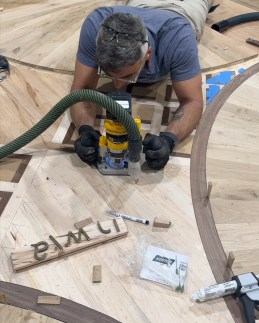
unfinished, and factory finished wood floors. Specialty skills also are taught based on student and instructor input, which may include introduction to designing parquetry, cutting marquetry, wood bending, and designing with circles/curves.

“I’ve been coming to NWFA schools like these for 10 years now, and it’s a great jumping-off point. The NWFA sets the standards, and you get to see people with a wide range of experience come together to solve problems you would encounter in real working situations,” says Patrick Gallagher with Granlie Floor Service in Belgrade, Montana. “If you’re
thinking about attending one of these advanced classes, you’ll come away with a better understanding of how to achieve growth, continue learning, and expand your overall knowledge base.”

The prerequisite for attending an Advanced Installation course is three years of installation experience and attendance at the NWFA’s Intermediate Installation school.

“I ask myself why I didn’t come to these classes sooner. I should have come years ago. There are so many valuable takeaways. The work we do is one thing, but the connections you make at classes like these are just as important. You can ask instructors like Ben Totta how they run their business and how they schedule their work,” says Bruno Morais with Bruno Wood Floors in Boca Raton, Florida. Of this experience he adds, “It’s more than just learning
techniques for laying floors, creating borders, and building medallions. Every time I come here, I learn something new. They have the best instructors, tools, and resources. Everything is top-notch. The NWFA gives you everything you need. It’s a no-brainer.”

To view the schedule of events and enroll, visit nwfa.org/hands-on-training/.

Source

Disclaimer: all images are owned and copyright by their respective owners and website (hardwoodfloorsmag.com) and “https://madcityflooring.com/blog” is for news, information, product news and reviews.